
There is a particular kind of excitement that comes from knowing a parcel with yarn is waiting for you somewhere across the world. Not the ordinary online-shopping kind, where you track a package to your own door. This was different. This was: fly to New Zealand, hug your daughter, and then — only then — find out whether the gamble paid off.
I had done my research from South Africa. I had spent what I can only describe as my entire bonus on yarn ordered online, shipped to our daughter’s address in New Zealand, because I knew the truth about yarn shopping there. In New Zealand, natural fibre is everywhere. Every yarn shop, in every town, in every weight and colour you could want. Here at home, that is simply not our reality. So I planned ahead, I shopped ahead, and I may have gone slightly overboard. There is no apology for that.
When we arrived, there was a beautiful collection waiting for me. And somewhere in that pile was a yarn I had never worked with before.
The Yarn
Aspen Polwarth by Wild Earth Yarns
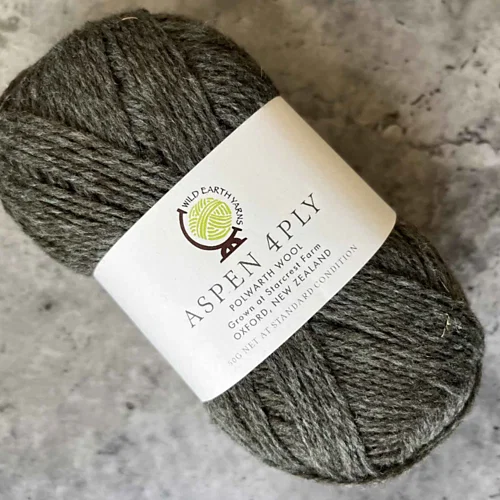
This yarn caught my attention for one reason: I had never worked with Polwarth before, and I was curious. Polwarth is a fine, silky wool breed — softer than many of its merino cousins — and Wild Earth Yarns grows, processes, and spins theirs entirely within the South Island of New Zealand. The fleece comes from Jack and Eleanor Patterson’s Starcrest Farm in Oxford, North Canterbury. From there it travels to Timaru for scouring, to Oamaru for dyeing, and back to Christchurch to be spun into yarn. A journey of just 519 kilometres, start to finish. That kind of transparency and local commitment is rare, and it matters to me.
The naturally coloured Polwarth fleece has been overdyed and woollen spun to create a rustic, heathered yarn.
The Honest Review
What I loved:
Polwarth really is as soft as people say. The woollen spun construction makes this yarn beautifully fluffy and lofty — it has a halo and a warmth to it that rewards the right project. I used it to knit Medvind by Elsebeth Judith, and the match was nearly perfect. The fluffy, heathered character of the yarn suited the design beautifully. Sometimes a yarn and a pattern just find each other, and this was one of those times.
What to be aware of:
Woollen spun construction means slightly less stitch definition than you would get from a worsted spun yarn. If you are knitting something where crisp, clear stitch work is essential — intricate cables, fine lace — this may not be your first choice.
And then there is the vegetable matter. There is quite a bit of it. If you are someone who is used to highly processed commercial yarn, this might catch you off guard. For me, it was not an issue at all — I spin my own yarn sometimes, and I understand that this is simply what honest, minimally processed natural fibre looks like. It is a sign of where the wool came from. But I mention it because it is the kind of thing worth knowing before you buy.
The Verdict
Would I buy Wild Earth Yarns again? Yes, without hesitation. The provenance, the quality, and the care behind the product are all exactly what I look for. The Aspen Polwarth is a beautiful, characterful yarn that rewards the right project and the right maker.
It also taught me something I should probably already have known — that sometimes the yarn you have never tried before is worth the gamble.
You only live once. Buy the yarn.
Have you ever worked with Polwarth? I would love to know what you made with it.


Thanks for this great review, Hilda! I appreciate learning about new (to me) yarns especially for someone as knowledgeable and talented as you.
Big pleasure.
That sweater you hsve on – is that made from the yarn you purchased. If it is – it looks great. Where can I find that pattern please?
The link to the pattern is in the blog post, but here you go: https://www.ravelry.com/patterns/library/medvind