
There are projects that begin with a plan.
This is not one of those projects.
It Started in New Zealand
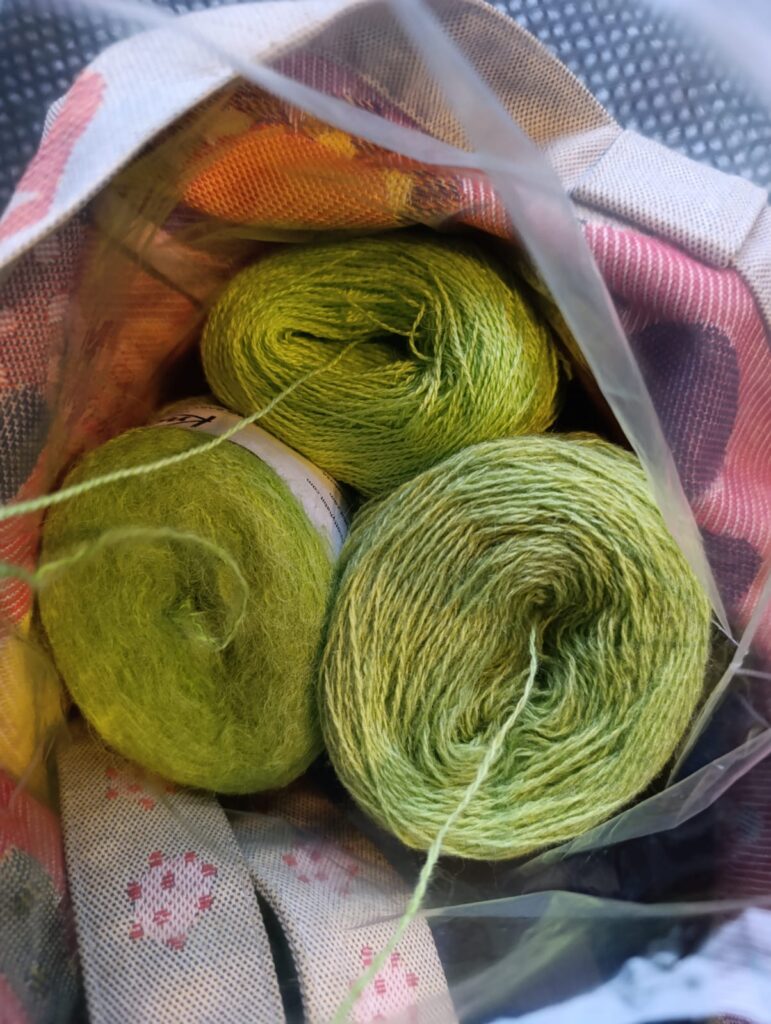
Last year, while visiting my daughter, I was browsing yarn online and fell completely in love with two skeins of MYak Tibetan Fibres in a colour called Appletini. Bright lime green. The kind of colour that does not ask permission.
I bought them immediately. I had absolutely no idea what I was going to make with them. Two skeins is not very much yarn, as it turns out, but that felt like a problem for future Ilona to solve.
Future Ilona took her time.
The Complication
Several months later, I started looking for a pattern worthy of those two skeins. In the process, I came across comments on Ravelry suggesting that MYak breaks easily. This was useful information, and it changed my approach entirely.
The obvious solution was to double-strand the yarn with something else — something that would add strength without overwhelming the character of the MYak. I ordered two skeins of Cascade Yarns Alpaca Lace from Natural Yarns in a matching lime green (colour 1490). Problem solved, I thought.
It was not entirely solved.
The Sophie Hood
Then I found the Sophie Hood, designed by PetiteKnits. And that was that.
Being a permanent camper, I live outdoors in all weather. A beautiful, well-made hood for cold winter days is not a luxury — it is a practical necessity. The Sophie Hood is constructed in a way that made me want to cast on before I had fully thought through the logistics. But the logistics were as follows: the pattern calls for aran weight yarn. Two strands of lace weight, while charming, do not equal aran weight. Not quite. The solution to that problem is simple: get more yarn and add a third strand. Right? Right.
The Third Yarn
I ordered three balls of yarn from Knotty Habit.
74% Suri Alpaca. 26% Mulberry Silk.
Held together with the MYak and the Cascade Alpaca Lace, the three strands finally reached the required weight. I cast on yesterday. The fabric is impossibly soft and beautifully fluffy — the kind of thing you want to press against your cheek before it even becomes a garment.
It will, in all likelihood, be the most expensive Sophie Hood in the history of mankind.
I love it completely.
The Yarn Details
For those who want to know exactly what went into this:
MYak Tibetan Fibres — colour: Appletini
Purchased in New Zealand. A bright lime green lace weight with beautiful character and, as I now know, a tendency to break if worked alone.
Cascade Yarns Alpaca Lace — colour 1490
Sourced from Natural Yarns. The supporting character in this story. Adds strength and a soft hand without competing with the MYak.
Suri Alpaca / Mulberry Silk blend — 74% Suri Alpaca, 26% Mulberry Silk
Sourced from Knotty Habit. The yarn that made the whole thing possible. Extraordinarily soft. The kind of fibre content that makes you understand, on a molecular level, why people become yarn collectors.
A Note on Impractical Decisions
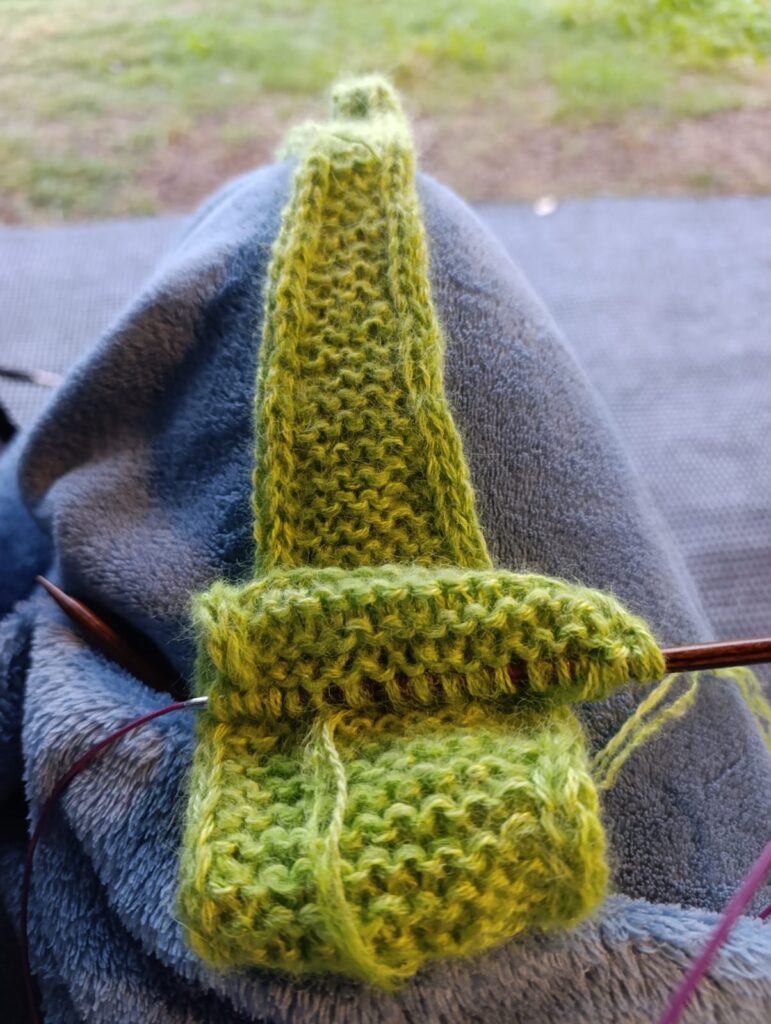
Permanent camp life requires practical choices. A swift and yarn winder in storage. A wardrobe that fits in a relatively small space. Shoes that can handle both gravel roads and dinner out.
And occasionally, a hood made from three strands of luxury yarn that costs more than it has any right to cost, because the cold is real and the yarn is beautiful and life is short.
Use the good yarn. Even for the project you had not planned.
Especially for that one.
The Sophie Hood pattern is by PetiteKnits. I will share more about the finished hood once it is off the needles — and once I have found a suitably dramatic rainy hillside to photograph it on.



I am not a permanent camper – but I do spend a lot of time in Hogsback, and I’m thinking that just such a hood might be what I need up on top of that mountain in Winter….. and quite often in Summer too come to think of it!
It is worth knitting. Quite lovely!